Google Elevates AI Infrastructure Chief, Invests Billions

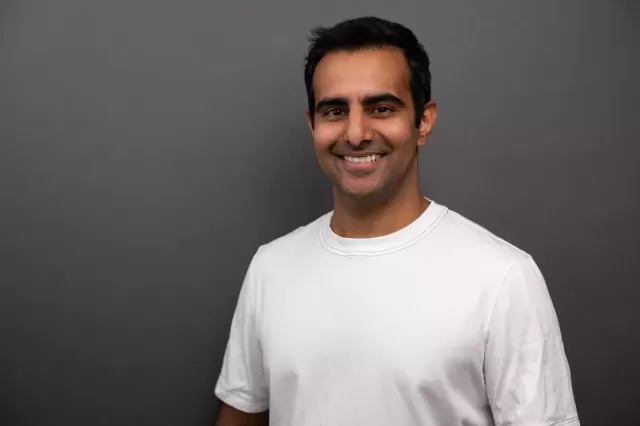
In a significant strategic realignment, Google is doubling down on its AI infrastructure by promoting Amin Vahdat to the newly established role of chief technologist for AI infrastructure. This high-level position, which reports directly to CEO Sundar Pichai, underscores the critical nature of foundational hardware and software in the escalating race for AI dominance. The move comes as Google's parent company, Alphabet, signals massive capital investments, with projections nearing $93 billion by the close of 2025 and expectations for even greater spending in the following year.
The Architect of Google's AI Engine
For the last decade and a half, Vahdat has been a central architectural force behind Google's AI foundation. A computer scientist with a PhD from UC Berkeley and a history that includes a research internship at Xerox PARC, he joined Google in 2010 after a distinguished academic career at Duke University and UC San Diego. With an extensive portfolio of published research, his work has consistently centered on a core challenge: making vast, interconnected computer systems operate with maximum efficiency.
Vahdat is already a prominent figure within the company's technical leadership. Just last year, in his capacity as VP and GM of ML, Systems, and Cloud AI, he took the stage at Google Cloud Next to introduce Ironwood, the company's seventh-generation Tensor Processing Unit (TPU). He unveiled staggering specifications for the new hardware, with individual pods containing over 9,000 chips capable of delivering 42.5 exaflops of computational power. He highlighted the urgency of this work by noting that the demand for AI compute has exploded by a factor of 100 million in less than a decade.
Pioneering Google's Core AI Technologies
Vahdat's influence extends across the entire stack of technologies that give Google its competitive advantage in the AI space. He has been the driving force behind the essential, behind-the-scenes work that enables everything from Google Search to the training of its largest AI models. His key contributions include:
- Custom AI Accelerators: He has spearheaded the development of Google's custom TPUs, the specialized chips designed for both training and running AI models. This in-house hardware provides Google with a powerful edge over competitors who rely on third-party silicon.
- High-Speed Networking: Vahdat has orchestrated the creation and scaling of the Jupiter network, an ultra-fast internal fabric that connects Google's servers. This network, now capable of 13 petabits per second, is the circulatory system that allows for the rapid movement of massive datasets required for modern AI.
- Intelligent Resource Management: His work has been integral to the continuous development of the Borg system. This sophisticated cluster management software acts as the central nervous system for Google's data centers, intelligently allocating computing tasks to servers to optimize performance and efficiency across a global fleet of machines.
- Next-Generation CPUs: He has also overseen the creation of Axion, Google's first custom-designed, Arm-based CPUs tailored for data center workloads, further advancing the company's efforts in vertically integrated system design.
In a fiercely competitive market where top-tier AI experts are in constant demand, this promotion is also a clear strategic play for talent retention. By elevating Vahdat to a C-suite adjacent role, Google is securing the leadership of an individual who has spent 15 years building the very foundation of its AI future, ensuring he remains a linchpin in the company's strategy for years to come.