Tungsten Carbide: A Cost-Effective Catalyst
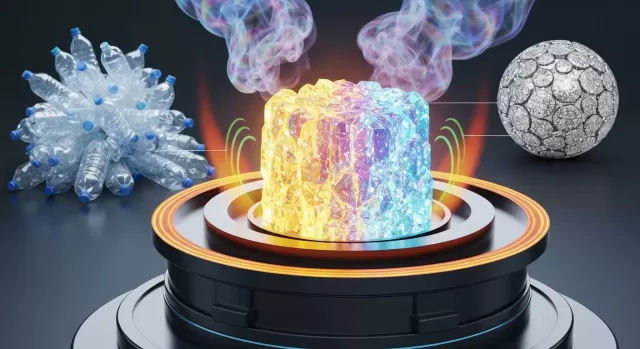
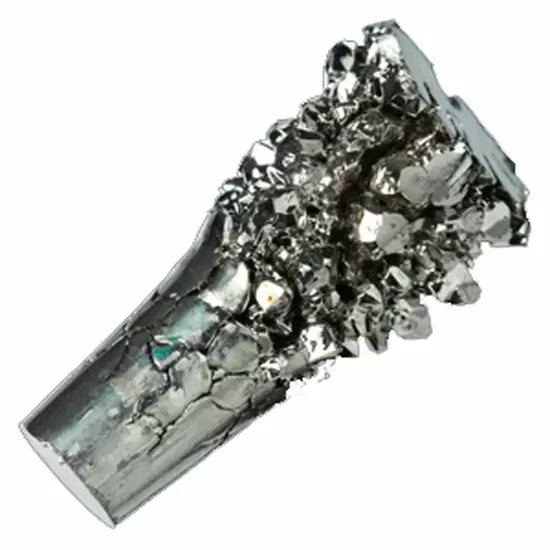
Traditional manufacturing for everyday items like detergents and plastics has long been tied to the use of rare, expensive catalysts such as platinum. While these precious metals are highly effective, their high cost and limited availability create significant barriers to sustainable industrial growth. Researchers are now looking toward tungsten carbide—a durable, inexpensive material common in cutting tools—as a viable alternative to these costly metals.
Despite its abundance, tungsten carbide has historically been difficult to manage in chemical settings. Its performance is highly dependent on how its atoms are arranged, and these configurations can shift unpredictably during reactions. A research team led by Marc Porosoff at the University of Rochester has recently developed methods to stabilize and optimize this material, positioning it as a serious competitor to platinum.
Decoding the Atomic Structure of Tungsten Carbide
The effectiveness of tungsten carbide is dictated by its "phases," or the specific patterns in which its atoms settle. Because the environment inside a chemical reactor is extreme, observing these changes in real-time has historically been a challenge for scientists. To solve this, the Rochester team utilized a method called temperature-programmed carburization, allowing them to create and observe specific phases of the material at temperatures reaching 700 degrees Celsius.
Their experiments revealed that while some phases are more naturally stable, they are not always the most effective for catalysis. The team identified a specific phase, known as β-W2C, which excelled at converting carbon dioxide into the chemical building blocks required for synthetic fuels. This discovery suggests that with further refinement, tungsten carbide could deliver the same results as platinum at a fraction of the price.
Transforming Plastic Waste into High-Value Resources
The applications for this research extend into the realm of environmental sustainability, specifically regarding the global plastic crisis. Most current recycling methods result in lower-quality materials, but Porosoff's team is focused on upcycling—turning waste into something more valuable. By using tungsten carbide to drive a process called hydrocracking, the researchers successfully broke down polypropylene, a common plastic used in consumer goods.
Tungsten carbide offers several advantages over traditional platinum catalysts in this area:
- Better accessibility: Unlike platinum catalysts, which often have tiny pores that clog when processing large plastic molecules, tungsten carbide allows for easier interaction with bulky polymer chains.
- Enhanced efficiency: In laboratory tests, the tungsten carbide catalyst was over 10 times more efficient at breaking down plastic waste than its precious metal counterparts.
- Resistance to degradation: The material is less susceptible to the contaminants often found in plastic waste streams, which typically deactivate traditional catalysts.
Enhancing Performance Through Thermal Precision
The team also addressed a major hurdle in chemical engineering: accurate temperature measurement. Industrial reactions often involve a delicate balance where one process releases heat while another absorbs it. If these temperatures are not perfectly synchronized, energy is wasted and efficiency drops.
By implementing advanced optical measurement techniques, the researchers found that standard industrial temperature readings could be inaccurate by as much as 100 degrees Celsius at the catalyst's surface. This level of precision allows scientists to better match "tandem" reactions, ensuring that heat produced in one stage of a process is effectively used by the next. This breakthrough not only improves the use of tungsten carbide but also provides a more reliable framework for all types of catalysis research.
By combining structural control with precise thermal data, this research paves the way for a more circular economy. Moving away from a dependence on rare metals toward Earth-abundant materials like tungsten carbide could fundamentally change how we manage carbon emissions and plastic waste.